


Castel Sant’Angelo is one of Rome’s most iconic monuments, originally built as Emperor Hadrian’s mausoleum in 139 AD. Today it’s a world-class museum featuring Renaissance frescoes, papal apartments, and a spectacular terrace with panoramic views of the Eternal City. Open Tuesday-Sunday, 9 AM to 7:30 PM (last entry 6:30 PM). Admission starts at €18. Book tickets online to skip queues. Plan 2-3 hours for your visit. Partially wheelchair accessible with elevator access to multiple levels.
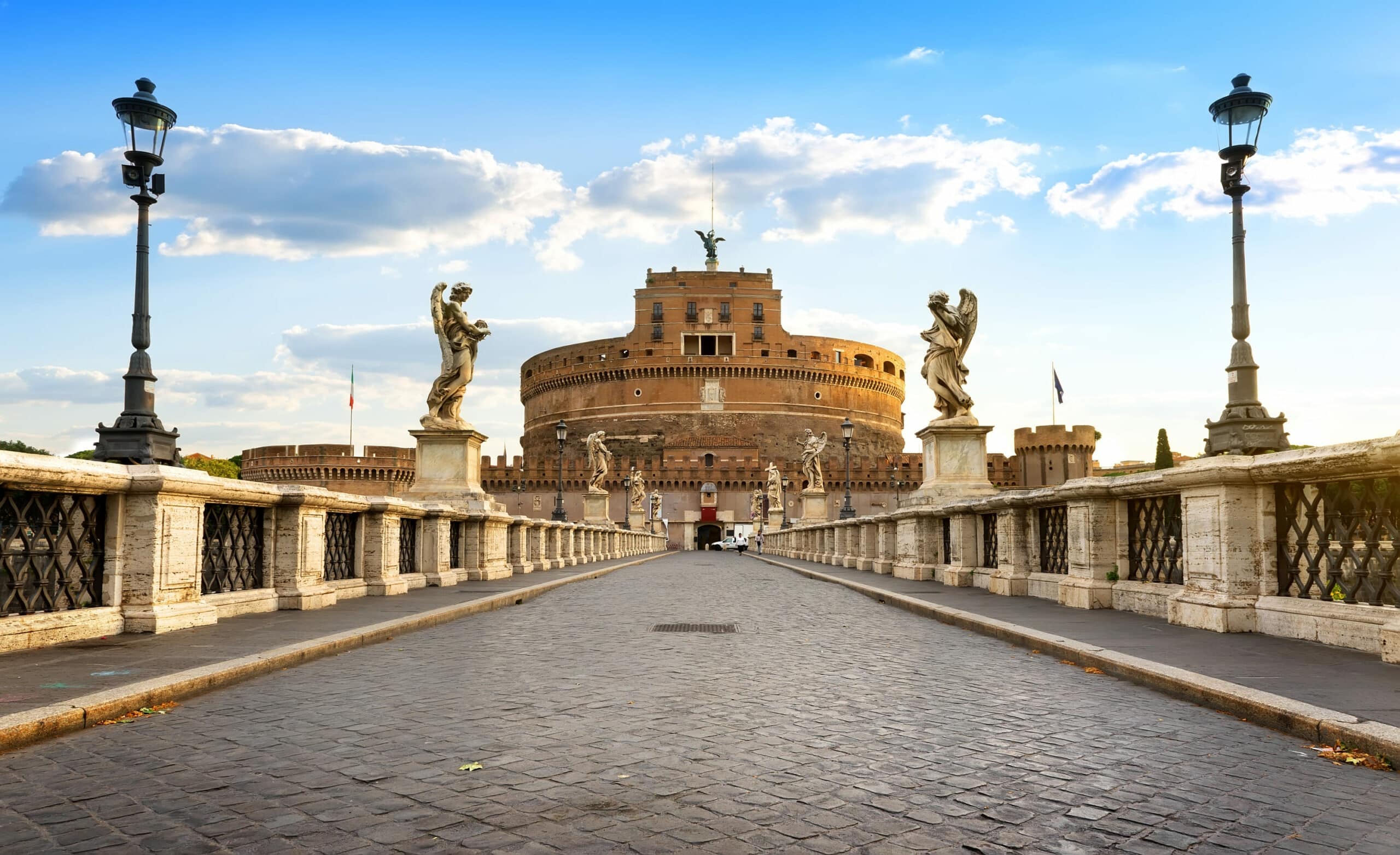
Construction of Castel Sant’Angelo began in 135 AD under Emperor Hadrian, who intended it as a mausoleum for himself and his family, and was finished in 139 AD. This wasn’t just any tomb—it was an architectural marvel designed to stand for eternity.
The original structure was breathtaking in scale and ambition. The building had a square base of 89 meters on each side and a height of 15 meters, with a second cylindrical building about 20 meters high, topped by a circular temple surrounded by columns. On top of all this sat a bronze quadriga (chariot) led by a colossal statue of Hadrian.
Unlike many Roman monuments that were quarried for building materials over the centuries, Castel Sant’Angelo was preserved and repurposed. A short time after its completion, it became a military building, which in 403 AD would be integrated into the Aurelian Walls. The Mausoleum soon became an advanced bastion of the Aurelian Walls, a sort of bridgehead across the River Tiber, probably by Honorius in 403 AD.
The castle’s strategic location made it invaluable for Rome’s defense. It was a great stronghold for access to the city from the north, so much that it would save the Vatican settlement from the Sack of the Visigoths of Alaric.
Image placeholder: roman-origins.jpg
The turning point in Castel Sant’Angelo’s history came during a moment of divine intervention—or so the legend goes. In 590 AD, while a great epidemic of plague devastated the city, Pope Gregory I had a vision of Saint Michael the Archangel on top of the castle, announcing the end of the epidemic. In memory of the apparition, the building is crowned with a statue of an angel.
This legendary event gave the castle its enduring name: Castel Sant’Angelo (Castle of the Holy Angel). From this point forward, the fortress became intimately connected with papal power and protection.
Transformed into a fortress to guard Rome as early as the 6th century, it was called “castellum”. Following the apparition of the Archangel Michael on its summit during the plague of 590, it acquired the full name of “castellum sancti Angeli”.
The medieval period saw the castle evolve into a symbol of papal authority. In 1277, an 800-meter fortified corridor was built that connected the castle with the Vatican City so that the Pope could escape in the event of danger. This secret passage, known as the Passetto di Borgo, became legendary—a lifeline for popes fleeing danger.
The Renaissance transformed Castel Sant’Angelo from a fortress into a palace. A place of extreme defense for the popes, walls and bastions were added but, at the same time, it achieved the status of a luxurious papal residence.
During the Renaissance, several popes added rooms and decorations to the castle to make it more comfortable, even using it as a temporary residence. The castle became a canvas for the greatest artists of the age. In the 15th century, popes started having luxurious living quarters spruced up in the castle with masterpieces by famous artists on the wall, including Perin del Vaga, one of Raphael’s pupils. You can still visit the papal rooms and halls to this day.
However, the castle also served darker purposes. Under Pope Alexander VI Borgia, Castel Sant’Angelo also became a prison, where some of the most notable dissidents and criminals of the time were imprisoned, including the famous sculptor and goldsmith Benvenuto Cellini. The cells, often cramped and devoid of light, remain part of the museum route today, offering a glimpse into the harsh prison conditions of the past.
The iconic bronze statue of Archangel Michael crowning the castle is one of Rome’s most recognizable symbols. The viewing platform is complete with an 18th-century bronze statue of Archangel Michael at the castle’s highest point. This is actually the sixth version of this statue! The first four were destroyed when they were hit by lightning. And the fifth statue of Archangel Michael (dating back to 1544) can now be found in the forecourt to the papal apartments.
The statue’s journey reflects the castle’s dramatic history—struck by lightning multiple times, yet always restored. Today’s version stands as a testament to the castle’s resilience and spiritual significance.
Castel Sant’Angelo is organized across multiple levels, each revealing different chapters of Rome’s history. Here’s what awaits you:
The ground level introduces you to the castle’s Roman origins. You’ll walk through the Dromos, the original Roman spiral ramp that once led to the burial chamber. This ancient passageway is remarkably preserved and gives you a tangible connection to Hadrian’s era.
The ground floor also houses the Chapel of the Condemned and the Courtyard of Executions, stark reminders of the castle’s use as a prison. These spaces tell stories of medieval justice and papal authority. The radial cells on this level once held prisoners awaiting trial or execution.
You’ll also find the castle’s essential services here: restrooms, gift shops, and a café where you can grab refreshments before continuing your ascent.
Image placeholder: ground-floor.jpg
The first floor marks the transition from fortress to palace. Here you’ll discover the Bastions and the patrol walkway, where guards once monitored the city below. These areas offer early glimpses of the panoramic views that make Castel Sant’Angelo famous.
This level also features the Courtyard of the Angel, a beautiful open space that served both defensive and residential purposes. The architectural sophistication increases noticeably here—you’re entering the realm of papal luxury.
The first floor provides access to some of the castle’s most important defensive structures while beginning to showcase the artistic refinements that later popes would add.
Image placeholder: first-floor.jpg
The second floor is where Castel Sant’Angelo truly reveals its Renaissance magnificence. Here you’ll find the papal apartments, decorated with frescoes by some of the Renaissance’s greatest artists.
The Library Hall dating back to the 16th century is a firm favorite among visitors. Just make sure you look up at the vaulted ceiling, which tells the story of Ancient Rome.
No visit would be complete without admiring the Chamber of Cupid and Psyche, the bedroom of Pope Paul III dating back to the 16th century. The room is named after its mythological murals, which depict—scene by scene—the story of Cupid, who was sent by his mother Venus to punish the beautiful mortal Psyche.
The Armoury on this level displays an impressive collection of historical weapons and armor. If you’re interested in historical armour and weapons, you won’t want to miss out on the armoury. Prepare to be fascinated by armour, uniforms, weapons and cannons that were used between the 16th and 19th century.
Image placeholder: second-floor.jpg
The crowning jewel of any visit to Castel Sant’Angelo is the terrace at the summit. The view of the dome at Saint Peter’s Basilica and over the rooftops of Rome from up on the platform is so beautiful that you can’t help but fall in love with the Eternal City.
This is where the bronze Archangel Michael stands eternal watch over Rome. On clear days, the panorama extends across the entire city—a 360-degree embrace of the Eternal City’s beauty.
| Day | Hours | Notes |
|---|---|---|
| Tuesday – Sunday | 9:00 AM – 7:30 PM | Last admission: 6:30 PM |
| Monday | Closed | – |
| January 1 | Closed | – |
| May 1 | Closed | – |
| December 25 | Closed | – |
| First Sunday of Month | 9:00 AM – 7:30 PM | Free admission (no advance booking) |
Note: Visitors will be asked to leave the exhibition rooms 30 minutes before closing time.
| Ticket Type | Price | Includes |
|---|---|---|
| Standard Entry | €18 | Museum access, terrace, all floors |
| Entry + Audio Guide | €28 | Standard entry + multilingual audio guide |
| Guided Tour (1 hour) | €30+ | Professional guide, skip-the-line access |
| Children (under 18) | €13 | Same access as adults |
| Disabled Visitors | Free | Free admission + 1 companion |
Booking Recommendation: Online ticket booking for Castel Sant’Angelo is strongly recommended. By booking in advance, you will avoid long queues and crowds at the ticket office and can choose from different ticket types (e.g. guided tours) that may no longer be available if you buy your ticket on the spot.
By Metro:
By Bus:
By Foot:
Address: Lungotevere Castello 50, 00193 Rome
Castel Sant’Angelo makes genuine efforts to accommodate visitors with disabilities, though the historic architecture presents challenges.
Wheelchair Access:
Free Admission for Disabled Visitors:
Audio Guides:
Facilities:
Weekday Mornings (Recommended)The best time to visit Castel Sant’Angelo is on a weekday morning, especially when it opens at 9 AM. During this time, you can enjoy a more serene and less crowded experience, savoring the historical ambiance at your own pace.Seasonal Considerations:
Evening Visits:
To fully explore Castel Sant’Angelo, allocate 2-3 hours. This allows time to:
What to Bring:
What NOT to Bring:
Dress Code:
Security:
Dining:
Q: How long does it take to visit Castel Sant’Angelo? A: The average visit time is 2 hours. However, this can vary depending on many factors: the type of company, the time available and the time of year you decide to visit.Q: Is Castel Sant’Angelo worth visiting? A: Absolutely. It is one of the most important attractions in Rome and Italy and is unquestionably worth a visit. The combination of Roman history, Renaissance art, papal intrigue, and panoramic views makes it essential.Q: Can I visit with children? A: Yes, though it’s a historic fortress, so families should plan for stairs, long walking distances, and limited modern facilities. The terrace views and historical stories appeal to older children especially.Q: Is there a dress code? A: While there isn’t a strict dress code, it’s recommended to wear comfortable clothing and walking shoes.Q: Can I re-enter if I leave? A: Unfortunately, re-entry into Castel Sant’Angelo is generally not allowed. Once you exit the attraction, you cannot return without purchasing another ticket.Q: What’s the best time to visit for photos? A: Early morning (9-10 AM) offers soft light and fewer crowds. Sunset from the terrace is spectacular for photography, though you’ll share the space with other visitors.Q: Are there restaurants nearby? A: Yes. Le Terrazze restaurant is located on the rooftop, offering breathtaking views of the dome of St. Peter and the River Tiber. The surrounding neighborhood also has many dining options.Q: Can I bring a large bag or backpack? A: Large bags must be checked at the entrance. Plan accordingly if you’re traveling with luggage.Q: Is the audio guide worth it? A: Yes, especially if you want to understand the historical and artistic significance of each room. The multilingual audio guide is included with some ticket packages.
Book your tickets now and experience one of Rome’s most iconic monuments. Whether you’re drawn by ancient Roman history, Renaissance art, papal intrigue, or simply the breathtaking views, Castel Sant’Angelo offers an unforgettable journey through centuries of the Eternal City’s story.
Book Tickets | Find Hotels | Discover Restaurants